
How to Clean Soot Off Walls Safely
To clean soot off walls without ruining the paint, lift the dry soot first and keep water out of it until most of the residue is gone. Soot is oily, so a wet rag turns a light film into a smear that sinks into drywall. This guide covers the dry method, the surfaces to leave to a crew, and the signs that the job has outgrown a sponge.
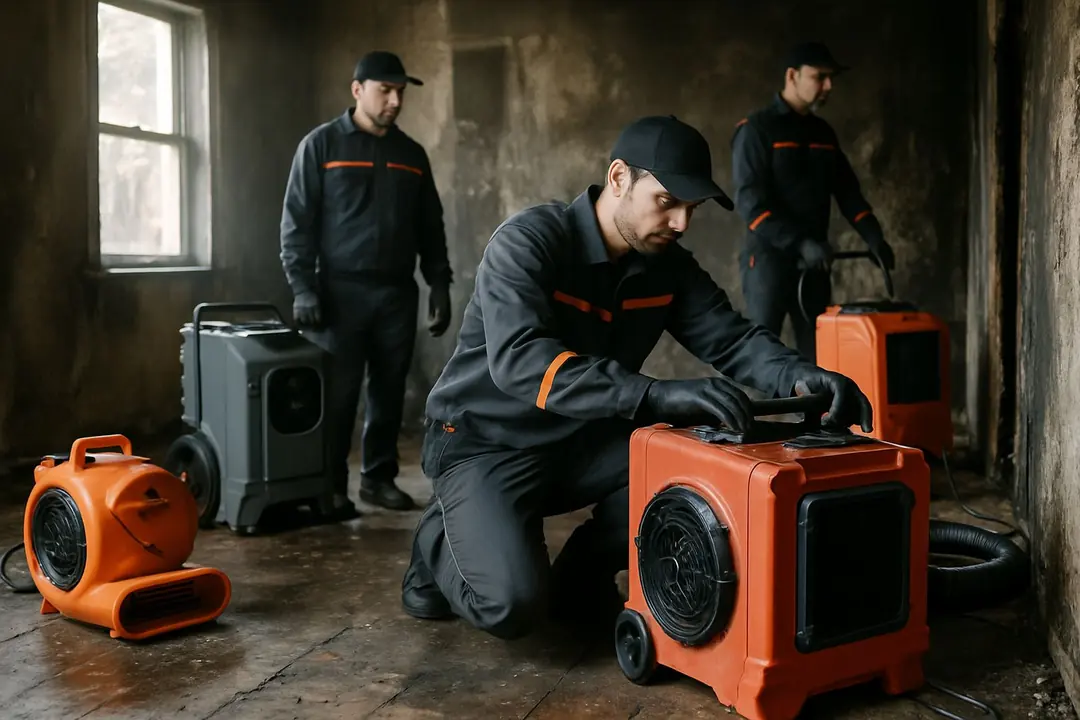
Clean soot off walls in five steps
This applies to light soot on painted walls after a small fire, with the area cleared by the fire department. 1. Wear gloves, goggles, long sleeves and an N95 respirator, and open a window, but do not run the heating or air conditioning, which spreads soot through the ducts. 2. Lift loose dry soot with a dry-cleaning sponge, also called a chemical sponge with light strokes and no scrubbing, and cut off each dirty face as it turns black. If you vacuum, use a HEPA filter and keep the nozzle just off the wall. 3. Test a mild dish soap solution on a hidden spot. 4. Blot the wall with light pressure instead of scrubbing, then rinse with clean water and dry. 5. Stop and call a crew if the soot smears, the wall stains or the smell stays. The steps follow the method in Restoration 1's April 2026 guide, which was read on 2026-11-07.
Surfaces where wiping makes it worse
Unpainted drywall and wallpaper take soot into the paper face and do not forgive wet cleaning, and heavily soiled unpainted drywall may need to be replaced. Brick and stone are porous, and so is concrete, so soot works into the surface and needs different products. Wood paneling and anything unidentified is better left alone until it has been tested. The kind of smoke matters too. Dry soot from a fast, hot fire wipes off, while wet smoke from smoldering plastics and the protein residue from kitchen fires smear and need chemical cleaning. That is why the same kitchen wall can clean up in one house and need repainting in the next.
When to stop and call for soot removal
Call a crew when soot covers several rooms, the ceiling or the vents, when the residue feels oily or sticky, when the smoke smell stays strong, when the HVAC system ran during the fire, when contents were damaged too, or when the fire burned plastics or chemicals. Eye, throat or breathing irritation is also a reason to leave the cleaning to a crew. Published national guides put professional soot removal at about $400 to $1,700, with dry soot at the low end and oily soot from $1,000 up, per LawnStarter's guide updated 2026-11-03. The smoke and soot cleanup page explains how the crew tests the residue and which method it uses for each kind, and the smoke damage restoration page covers the odor that can remain after the walls look clean.
What a crew does that a sponge cannot
A technician tests the residue to see which kind it is, cleans the ceilings and walls from the top down, and treats the ducts and the insulation behind the wall, where the odor sits. Orange County Fire Damage Pros walks every room with a residue test and a camera and writes the scope before cleaning starts, so a light film on one wall gets a light job. The kitchen fire cleanup page covers grease and protein residue on cabinets and walls.
Clean soot off walls: your questions answered
What is the best way to clean soot off walls?
Dry first. Lift loose soot with a dry-cleaning sponge or a HEPA vacuum held just off the wall, then blot with a mild soap solution on a small area and rinse. Water used too early smears the soot.
Can I wipe the soot off myself?
Light soot on a painted wall, yes, with the dry method. For anything wider, please do not, because water and household cleaners push the oily residue into the surface and can turn a cleanable wall into one that needs repainting.
Does vinegar remove soot from walls?
A little vinegar is sometimes added to a mild soap solution after the dry soot is gone, but vinegar does nothing for loose dry soot and does not remove the smell. Test it on a hidden spot first.
How do I clean soot off brick?
Brick is porous and holds soot, so a dry sponge and a test patch come first. Brick above a fireplace that keeps staining is a job for a crew with the right product.
Will cleaning the walls remove the smoke smell?
Rarely. The odor sits in the insulation, the framing and the ducts as well as the wall face, so a clean wall can still smell of smoke.