Fire Restoration Process Explained
The fire restoration process runs in a fixed order: secure the building, document, dry, clean, treat the odor, and only then rebuild. How long it takes depends on the fire, and published estimates run from a few days for minor damage to several months for severe damage. This guide walks through each stage in sequence and shows where Orange County Fire Damage Pros hands over records at the end.
The fire restoration process in order
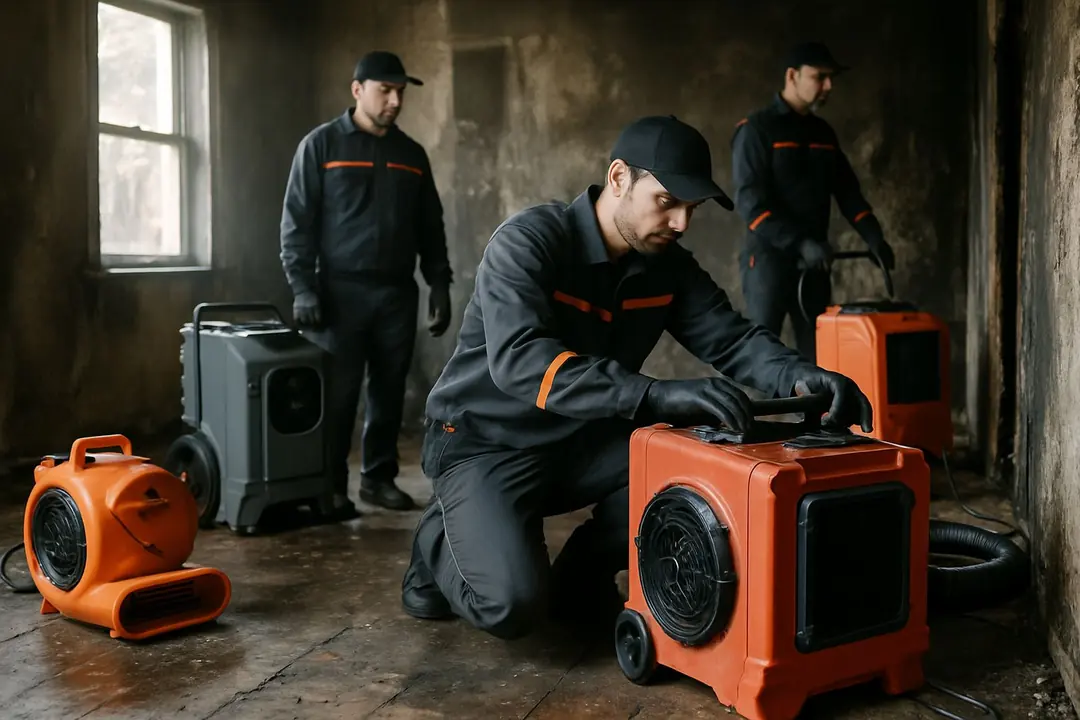
Numbered steps. 1. Safety first: the property is released by the fire department and the building is secured, with board-up and tarping if it is open. 2. Documentation: every room and item is photographed before it moves. 3. The written scope: what will be cleaned, what will be removed, what goes to contents cleaning and what the drying plan is, in writing before work starts. 4. Water: extraction and drying of what the hoses left, run alongside the smoke cleanup so mold does not start. 5. Removal: burned materials come out back to sound material. 6. Soot and smoke cleaning of the structure and the contents. 7. Odor treatment after the source is removed, then the odor is checked again on a warm day after the equipment leaves. 8. Records and a final walkthrough: the photos, the scope, the inventory and the moisture log. 9. Rebuild, which is a separate trade. The order matches the ten-stage sequence in Coit's restoration timeline article, last updated 2025-10-15.
How long the fire restoration process takes
Nobody can give a fixed number before the rooms are seen. One restoration company's published estimate, which is a vendor estimate and not a rule, puts minor damage at a few days to a week, moderate damage at several weeks and severe damage at several months, with structural repairs and permits adding the most time. Orange County Fire Damage Pros gives no timeline over the phone for the same reason it gives no price: the scope written on site sets it. What speeds a job up is a fast start, since firefighting water left in walls begins to cause secondary damage if drying waits.
Cleanup and rebuild are different stages
The restoration crew's work ends when the removal is done and the remaining structure is clean and treated. A rebuild that starts on charred framing or smoke-soaked drywall fails, because the smell comes back through the new paint. If a structural member was damaged, the crew stops and says so, and a structural contractor or engineer decides the repair. The fire damage cleanup page describes the removal stage in detail, and the smoke damage restoration page covers the odor stage.
How the process connects to the claim and the cost
The photos, the scope and the inventory from stages 2 and 3 and the final records are the documents an adjuster asks for, so they double as the claim record. The fire damage restoration cost guide shows what moves the price at each stage, and the fire damage insurance claim guide covers what California says about living costs while the work runs.
Fire restoration process questions answered
How long does fire restoration take?
It depends on the fire. One published estimate says a few days to a week for minor damage, several weeks for moderate and several months for severe, and the written scope on site gives the real figure.
What are the steps in the fire damage restoration process?
Safety and securing the building come first, then photos and a written scope. Drying and removal of burned material follow, then soot and smoke cleaning, odor treatment, and records with a final walkthrough. Rebuilding follows as a separate trade.
What is the smoke remediation process?
Find where the smoke traveled, clean or remove what holds the residue, then treat the air and the structure after the source is gone. The smoke damage restoration page has the detail.
Does the crew rebuild what burned?
Cleanup and the removal of burned material come first on every job. Ask about rebuilding when you call, and you get a written list of what came out so whoever rebuilds has exact quantities.
Do I need to wait for the insurance adjuster before work starts?
Board-up and drying should not wait, because delay lets damage spread. The adjuster needs the photos and inventory first, which is why they come before anything moves.